This past Saturday Mr. and Mrs. U visited the Edward Hopper exhibit at Washington D.C.'s National Gallery of Art and walked away with a not entirely uncharacteristic difference of artistic opinion.
Mrs. U Respectfully Declines
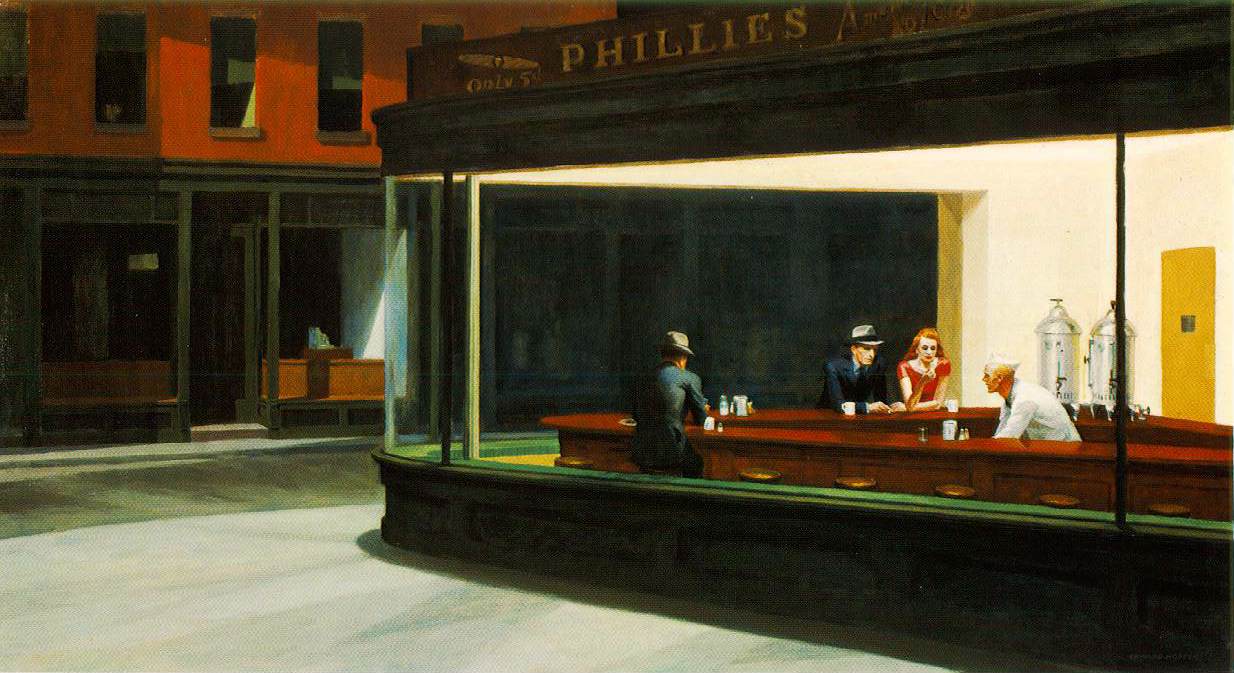
Before this exhibit I didn't know much about Hopper's work. I knew about one of his most famous paintings, Nighthawks, but that's about it. I was very excited to finally get a chance to see what NGA described as the "first comprehensive survey of Edward Hopper's career to be seen in American museums outside New York in more than 25 years." I mean, that's a big deal! I had friends who had already seen this exhibit and told me I would love it.
Boy, were they dead wrong.
Let me start off by saying that I recognize that Hopper was a great artist. His paintings, I also recognize intellectually, are also "great works of art." But let me tell you, by the time I had walked through that whole exhibit I felt like I had just taken a tour through Stephen King's world in The Stand after the Captain Trips disease just hit it. Unnerving images kept flying by of empty streets that should have been busy. There were houses with spooky windows and lone figures left behind in the aftermath. And constantly, there was the sickly green in so many of his paintings, like the green of death by infectious mucous. His paintings frightened me and left me grasping for Mr. U's hand so I knew that I really wasn't IN this apocalyptic world where I might run into that frightening zombie mask of a face in Chop Suey.
There was but one saving grace in all of his paintings and that was his watercolors of houses and lighthouses. I loved how he painted the sunlight on architecture. Specifically, there were two I liked, The Mansard Roof and Haskell's House. Even those have a creepy Amityville Horrorness about them though. Wait! Did I just see Norman Bates's mom look out of the upstairs window?
Showing posts with label Art Review. Show all posts
Showing posts with label Art Review. Show all posts
1/6/08



Mr. U's Respect is Reinforced
I have always had strong, favorable responses to the work of Edward Hopper, but until visiting his exhibit yesterday at the National Gallery of Art I never gave much thought to why - beyond the fact that I'm a depressive who is attracted to images of loneliness and isolation. But there is a great deal more to Hopper's work than his solitary people.
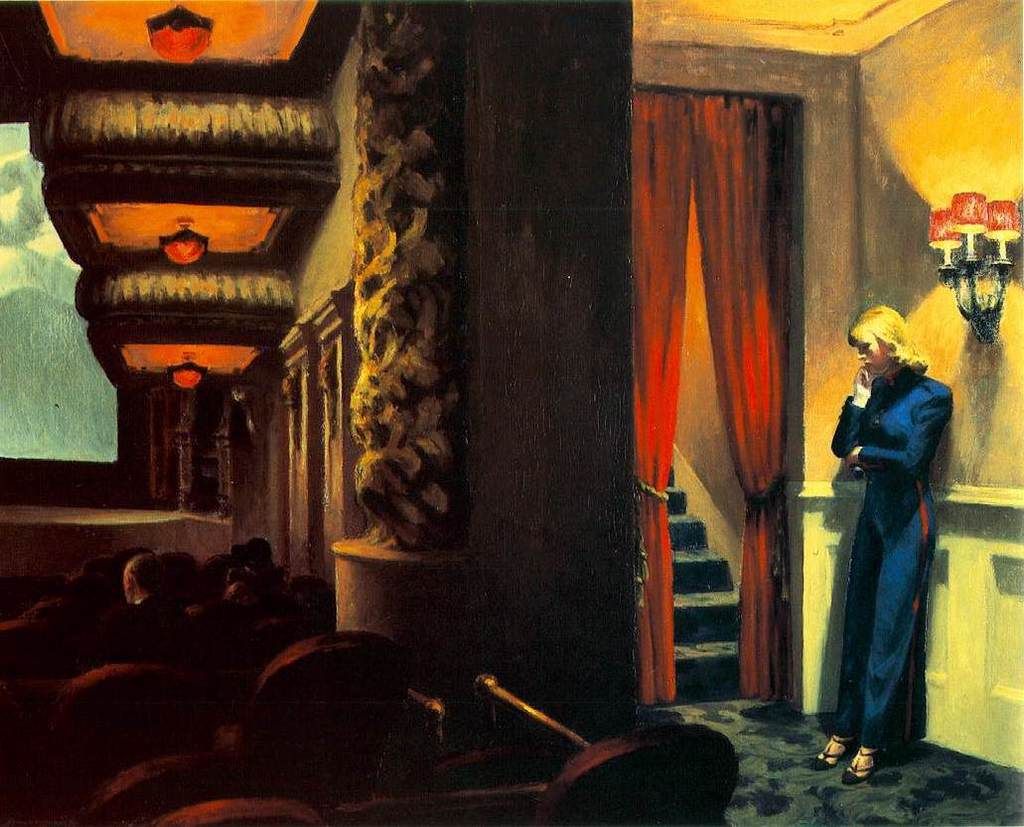
He was a master at capturing the interplay of shadows and light. He used them to detail his paintings like a lighting designer on a film set. Color is frequently of secondary importance to shading in establishing mood in Hopper's work. Were he a filmmaker, he would work most effectively in black and white. New York Movie, and Rooms for Tourists are fine examples among many others.
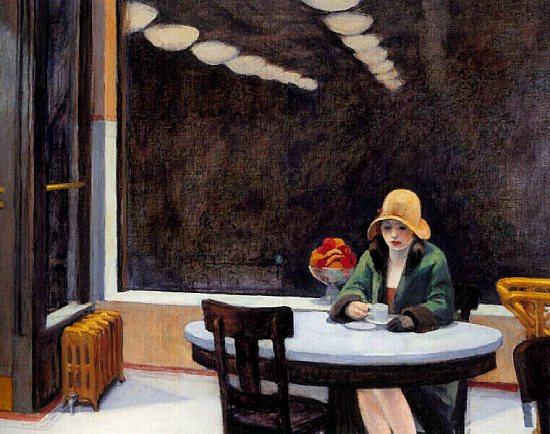
Like many of my favorite artists, Hopper sought to document the beauty of ordinary people and objects. Throughout his life in New York City he chose mundane storefronts, anonymous individuals and tiny corner cafes as his subjects despite the looming presence of monumental bridges and skyscrapers. Hopper was clearly uninterested in the obvious. He celebrated the joy and deep rewards that can only come from looking closely. See Automat, Gas, and Drug Store.
The only hindrance to my Hopper experience yesterday was the hundreds of people crowded into the exhibit with us. By the time we got to his later, more famous work the gallery was shoulder to shoulder with people and I felt like I was in line to ride Space Mountain, so we had to cut the visit a little short.
While in D.C. visiting the gallery, these license plates bewildered us. Taxation Without Representation? Was the local leadership mocking its consituency? Was the motor vehicle authority issuing satirical license plates? If so, I wanted in. Well, it turns out that residents of Washington D.C. really are taxed without being represented. Check out this article.
I have always had strong, favorable responses to the work of Edward Hopper, but until visiting his exhibit yesterday at the National Gallery of Art I never gave much thought to why - beyond the fact that I'm a depressive who is attracted to images of loneliness and isolation. But there is a great deal more to Hopper's work than his solitary people.
He was a master at capturing the interplay of shadows and light. He used them to detail his paintings like a lighting designer on a film set. Color is frequently of secondary importance to shading in establishing mood in Hopper's work. Were he a filmmaker, he would work most effectively in black and white. New York Movie, and Rooms for Tourists are fine examples among many others.

Like many of my favorite artists, Hopper sought to document the beauty of ordinary people and objects. Throughout his life in New York City he chose mundane storefronts, anonymous individuals and tiny corner cafes as his subjects despite the looming presence of monumental bridges and skyscrapers. Hopper was clearly uninterested in the obvious. He celebrated the joy and deep rewards that can only come from looking closely. See Automat, Gas, and Drug Store.


The only hindrance to my Hopper experience yesterday was the hundreds of people crowded into the exhibit with us. By the time we got to his later, more famous work the gallery was shoulder to shoulder with people and I felt like I was in line to ride Space Mountain, so we had to cut the visit a little short.
While in D.C. visiting the gallery, these license plates bewildered us. Taxation Without Representation? Was the local leadership mocking its consituency? Was the motor vehicle authority issuing satirical license plates? If so, I wanted in. Well, it turns out that residents of Washington D.C. really are taxed without being represented. Check out this article.

Subscribe to:
Posts (Atom)